
I have covered two bankruptcy stories before. Not from the usual angle of what happened and why; for each, I dug deeper into who could win from the wreckage.
The Magellan Aerospace story led me to Howmet. The IKEA store closures pointed me to Target. This week’s Chapter 11 filing from Focus Factor maker Synergy CHC Corp. points me squarely to Reckitt Benckiser (RBGLY).
Synergy CHC filed for bankruptcy on September 4, 2026, in the U.S. Bankruptcy Court for the District of Columbia, TheStreet reported.
Costco told the company back in July that it would be discontinuing Focus Factor products after a 16-year relationship. You see that one decision? It cost Synergy approximately 58% of its total 2025 net revenue, triggered an $18.9 million debt acceleration from its lender, and made Chapter 11 inevitable.
RBGLY currently trades at $14, down 10.62% year-to-date, according to Yahoo Finance.
How a 58% revenue concentration becomes a fatal single point of failure
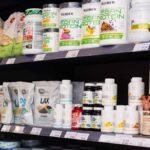
The Synergy CHC situation shows just how quickly retail concentration can become a risk. Focus Factor is a functional beverage brand with a 25-year legacy, enjoying established distribution in the U.S., Canada, and Mexico, and distribution across Walmart, Walgreens, Amazon, and BJ’s.
The company’s a brain supplement with vitamins, minerals, and neuro-nutrients. It carries a “#1 Pharmacist Recommended” claim from the 2025-2026 U.S. Pharmacy Times survey for memory support. None of that mattered once Costco made its decision.
More Retail:
- Home Depot is making a big bet on cautious consumers
- Another state just banned a controversial retail pricing practice
- JPMorgan just flagged a slow-build food crisis
“Costco accounted for approximately 58% of the Company’s net revenue during the fiscal year ended December 31, 2025,” the SEC filing stated. “The Company expects Costco’s decision to have a material adverse effect on the Company’s business, results of operations, liquidity, and financial condition.”
Costco did not give a public reason for dropping the brand. It did not need to. It’s a retailer that moves products in bulk, and it made its vendor decision for whatever reason.
The $18.9 million debt acceleration that followed confirmed Synergy had no financial cushion to survive even a temporary revenue disruption of this magnitude.
Why I think Reckitt’s Neuriva is the obvious beneficiary
Three structural advantages make Reckitt the clearest winner.
- Neuriva is already in Costco’s system. The Neuriva Brain Supplement Original (50 capsules) currently retails at Costco for $43.99. Reckitt does not need to win a vendor slot or navigate Costco’s notoriously demanding supplier requirements. It is already approved, integrated, and selling. Scaling volume within an existing supplier relationship is operationally easy.
- Reckitt’s product portfolio fits neatly into where Costco wants to go. Costco members tend to gravitate toward premium wellness products backed by established brands and research. Reckitt has been aggressively expanding Neuriva, with products including Neuriva Plus, Neuriva Ultra, and Neuriva Memory 3D. I see these premium formulations align with Costco’s push toward higher-margin health solutions far better than the legacy Focus Factor lineup.
- The regulatory history matters, too. Focus Factor has faced FTC settlements and consumer class-action lawsuits challenging its efficacy claims. Reckitt builds Neuriva’s marketing around clinically studied ingredients and GMO-free formulations.
After dropping a brand with that compliance history, Costco’s buyer relationships will naturally favor an institutional, publicly traded consumer health company with a clean regulatory record.
The Reckitt business picture and what the H1 2026 results show
The business picture matters for investors considering whether RBGLY at $14.00 and down 10.62% year-to-date represents an opportunity. While its primary listing is on the London Stock Exchange (RKT), it is highly visible to U.S. market investors via its American Depositary Receipts (ADRs) under the ticker RBGLY on the over-the-counter market.
Half-year 2026 (H1 2026) results showed Core Reckitt like-for-like net revenue growth of 2.7%, accelerating to 4.2% in Q2 alone, according to Reckitt’s earnings statement.
Gross profit margin for Core Reckitt was 60.9%. Adjusted operating profit margin was 24.8%. Free cash flow was £419 million in the first half. Approximately £3 billion was returned to shareholders during the period through dividends and buybacks, according to the Q2 earnings call.
Related: Loss of Costco deal helps push beverage brand into Chapter 11
Reckitt also announced a 5% increase in its interim dividend alongside an additional £500 million share buyback. Full-year 2026 guidance calls for 4% to 5% like-for-like net revenue growth in Core Reckitt.
A special dividend was also paid in February 2026 following the completion of the Essential Home business divestment, returning additional capital to shareholders.
Macrotrends‘ statistics show RBGLY with a 4.6% dividend yield at current prices, with the most recent dividend of $0.64 per share.
The valuation picture is also fair: trailing P/E of 11.36 and forward P/E of 14.24 for a company with 60.9% gross margins, a growing consumer health platform, and direct competitive beneficiary of its largest brain health competitor’s collapse.
What to watch for next at Costco
Synergy CHC built a strong brand on a structurally fragile foundation. The concentration risk was visible in the filings long before the bankruptcy. And then when Costco walked, the math became inevitable.
I think Reckitt has all it takes. The Costco shelf presence, regulatory credibility, supply chain, and product portfolio to absorb that demand without adding structural risk.
All of that and more is likely to translate to RBGLY’s financial results, depending on how aggressively Costco scales up Neuriva alongside the overall product developments.